
Concussion Management
Get back in the game.
A concussion can affect every aspect of your daily life, but you don't have to navigate recovery alone. Whether your injury happened yesterday or you've been struggling with symptoms for months, we're here to help guide your recovery every step of the way.
At FLOW, we take concussions seriously. Our chiropractors and physiotherapists are certified in Complete Concussion Management (CCMI), a 60 hour course that keeps our team up to date with the newest and emerging evidence in concussion care. From a comprehensive assessment and personalized treatment plan to symptom management, graded exercise, and return-to-play support, we'll guide you through every step of recovery.
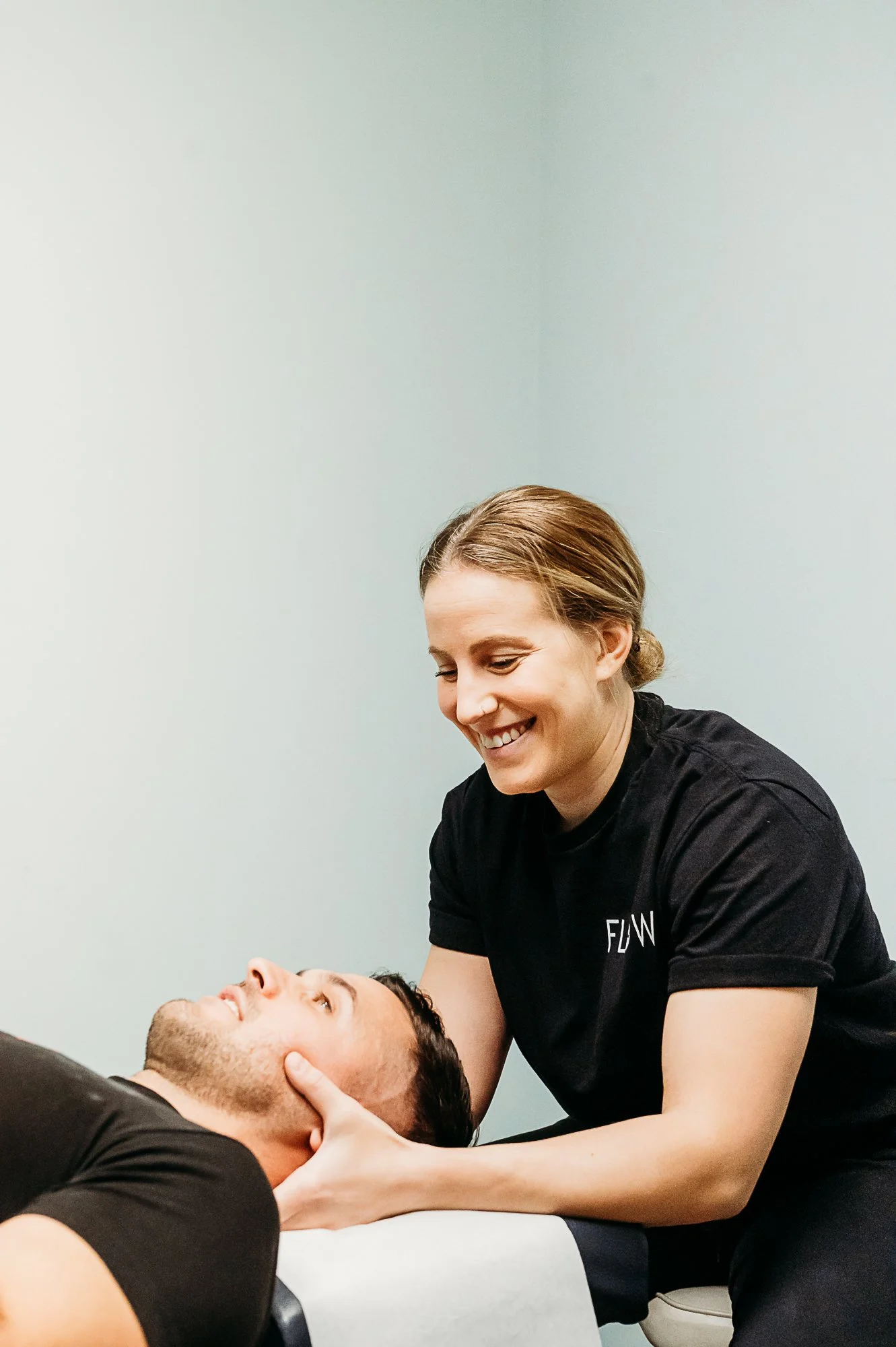
What is a concussion?
A concussion is a mild traumatic brain injury caused by a bump, blow, or jolt to the head, or a hit to the body that causes the head and brain to move rapidly. This sudden movement can cause the brain to twist inside the skull, leading to chemical changes and sometimes stretching or damaging brain cells.
Concussions do not always involve a loss of consciousness, and they will not show up on a standard CT scan or MRI. This can make them tricky to diagnose and even trickier to navigate, since symptoms can appear right away or take hours to show up, and every person's recovery looks a little different.
What are the symptoms of a concussion?
Headaches
Dizziness
Nausea or vomiting
Mood changes
Sensitivity to light and/or noise
Fatigue or sleep changes
Typical recovery window: 21 to 28 days
When to seek emergency care
If you or someone you are with experiences repeated vomiting, a worsening headache, loss of consciousness, seizures, slurred speech, or increasing confusion after a head injury, go to the nearest emergency room right away. These symptoms need immediate medical attention rather than a scheduled assessment.
What does a FLOW concussion protocol look like?
Assessment: Your practitioner will take the time to perform a comprehensive assessment to identify which systems have been affected and develop a personalized treatment plan to support your recovery.
Education: Understanding the science and physiology behind a concussion is a critical part of care. Your practitioner will help you understand what's happening in your body and why, and can explain the differences between a concussion, post concussion syndrome (PCS), whiplash, and other related injuries.
Personalized treatment plans: Every concussion is different. Depending on the findings of your assessment, treatment may include vestibular therapy, vision therapy, treatment of the muscles and joints of the neck, exercise-based rehabilitation, and other evidence-informed strategies to support your recovery.
Nutrition: Concussions can affect blood flow and electrolyte balance in the brain. Your practitioner can help you understand how diet and supplementation play a key role in your recovery.
Guided recovery plan: Recovery is more than just rest. Your practitioner will guide you through a recovery plan that involves individualized cognitive and physical progressions, helping you safely increase your activity levels and return to your daily routine with confidence.
Return-to-play: If you're involved in sport, your practitioner can guide you through a standardized return-to-play progression and help determine when you're ready to safely return to training, competition, and full participation.